
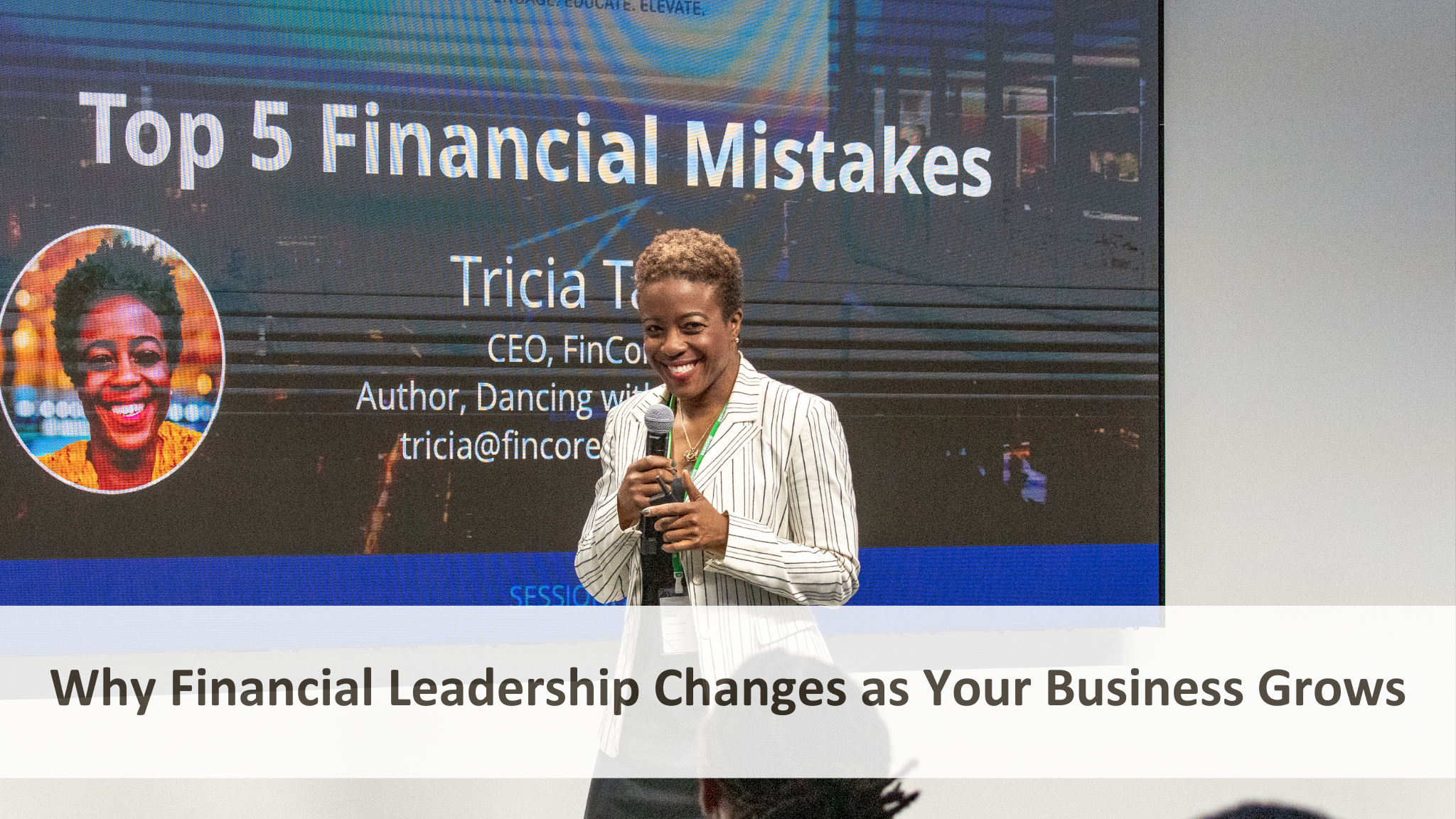
By Tricia M. Taitt, Fractional CFO and Author of Dancing with Numbers
At FinCore, we empower small business CEOs to grow and scale financially healthy businesses so they can exit successfully.
Preparing for exit? We strengthen your financial core (financial systems, people & numbers) so your company is more attractive and valuable.
Sign up here for a discovery call.
—
February 2026 marks 10 years since I started my firm, Art & Money Matters LLC, dba FinCore.
That milestone has made me reflective. Not just about my own journey, but about the hundreds of founders I've worked alongside as their businesses grew, stretched, and evolved.
And here's one of the clearest patterns I've seen over the last decade:
As your business grows, the financial leadership it needs changes, whether you're ready for that shift or not.
Growth Changes the Rules (Quietly)
In the early days of a business, financial leadership looks like survival:
-
Can we make payroll?
-
Are we profitable at all?
-
Do we have enough cash to get through the next few months?
At that stage, scrappiness works. Hustle works. Intuition often works.
But then the business grows. Revenue increases, the team expands and decisions get heavier.
And that's when many founders run into a confusing, frustrating reality:
"We're doing better than ever… so why does this feel harder?"
The Lesson Most Founders Learn the Hard Way
Here it is, plain and simple:
Revenue growth does not automatically create financial clarity, confidence, or control.
In fact, growth often exposes what was previously invisible.
As businesses mature, growth brings:
-
More fixed costs that don't flex easily
-
More people depending on your decisions
-
More risk tied to timing, cash flow, and margins
-
Less tolerance for "I'll figure it out later"
What worked when the business was smaller (reacting, gut-checking, looking backward at reports) starts to break down.
This is where many founders quietly blame themselves.
They think:
-
"I should know this by now."
-
"Other CEOs seem more confident than I feel."
-
"Why does money feel more stressful even though we're making more of it?"
But this isn't a personal failure. It's a leadership transition point!
Growth Requires a Different Kind of Financial Leadership
As businesses mature, finance has to move from:
-
tracking → interpreting
-
reacting → anticipating
-
surviving → leading
This is also why many founders feel frustrated even though they "have support."
They might have:
-
a great bookkeeper keeping things accurate
-
a CPA handling taxes and compliance
…but still feel like:
-
decisions are being made without enough visibility
-
cash flow surprises keep popping up
-
the future feels fuzzy instead of clear
That's not because anyone is doing a bad job.
It's because the questions you're asking now are different.
And when the questions change, the leadership required has to change too.
This Is the Reframe I Want You to Sit With
Needing more sophisticated financial leadership as your business grows is normal.
It doesn't mean you've lost your edge. It means you're running a more complex, valuable business.
The real risk isn't growth, it's waiting until chaos forces clarity.
A Simple Reflection (No Judgment)
Ask yourself:
-
What decisions am I making today that carry real consequences 12–24 months from now?
-
Where am I still relying on hindsight instead of foresight?
-
What would feel different if I had clearer financial visibility before making big moves?
You don't need to answer all of that at once, but noticing the shift matters.
The founders who build the most resilient, valuable businesses don't wait for pressure to demand change.
They build clarity early, while they still have options.
If this resonates, you're exactly where many strong, capable founders find themselves at this stage.
This is the work I've been doing strategically and intentionally, for the last 10 years.
Start building financial clarity before chaos forces it. 👉 Book Your Complimentary Strategy Call
Tricia M. Taitt
Author of Dancing with Numbers

Tricia Taitt is the CEO and Chief Financial Choreographer of FinCore. She holds an M.B.A from The Fuqua School of Business of Duke University, and a BS in Economics with a Finance concentration from The Wharton School at the University of Pennsylvania. For over 20 years, she's been a finance professional. Half of the time was spent working on Wall Street while the other half was spent in the trenches side by side with small business owners. As a result of working with FinCore, clients have been able to take control of their numbers and feel more confident in their ability to make decisions, while increasing profits by 10% and building a cash stash to invest in growth. Follow Tricia on LinkedIn and Instagram.