


Over the years, we’ve worked with small business owners who are preparing for exit or considering acquiring another company.
Both scenarios require time, additional investment and various advisors to execute successfully.
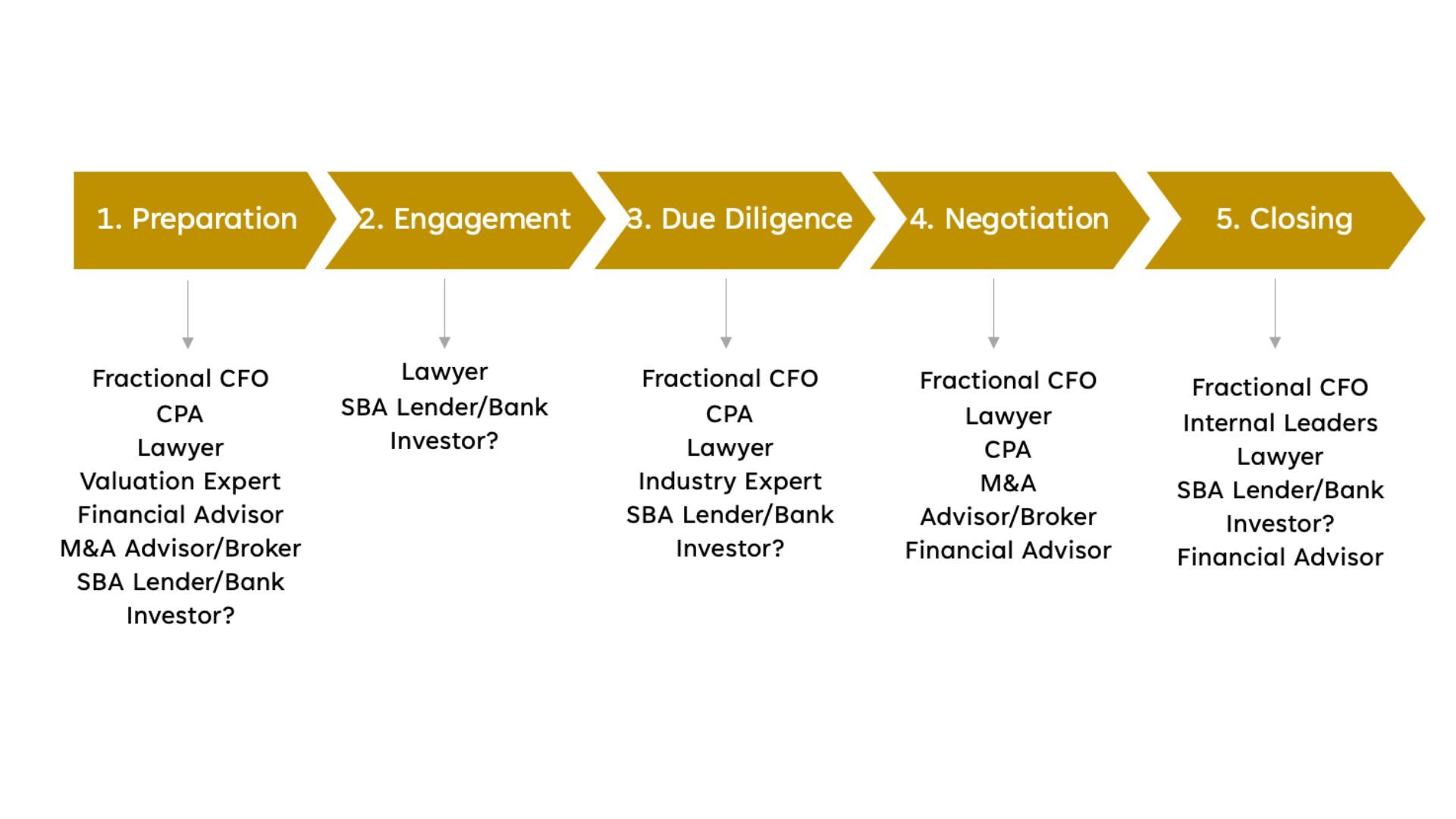
I’ve broken down the five phases of what to expect when selling a business, because we don’t want you jumping in the deep end blind and without help.
1) Preparation takes the most time, at least 3-5 years.
Most businesses we’ve worked with weren’t ready for sale. “What does ‘not being ready for sale’ look like?”, you ask?
It looks like:
– Having financial reports that reveal the business is not financially strong in terms of future revenue, profitability, cash flow and debt.
– Nothing is documented, and if someone on the financial team left the company, they would’ve taken all institutional knowledge with them.
– Not having the right advisors to guide you through this complex process.
It’s crucial to make sure your business is financially healthy and prepared for sale so you can negotiate the best price.
2) Engagement
Once you’ve had a valuation specialist provide a range of the business’ value, then it’s time to work with a business broker to market the company to potential buyers.
This phase also includes having meetings with potential buyers to evaluate if they are the right fit.
3) During the Due Diligence phase, expect to furnish all your legal and operational documents, as well as three to five years of financial statements to the buyer.
Throughout this entire engagement, it’s important to have a lawyer involved to draft any confidentiality or nondisclosure agreements. This ensures all your internal information remains confidential.
Be ready to answer a lot of questions from the buyer. It’s not your responsibility to think on the buyer’s behalf but do work with key senior leaders on your team to prepare any information the buyer requests.
4) Negotiation – During this phase, your lawyer is definitely at the table helping you negotiate the sale price, terms, and conditions of the sale.
They should also draft a letter of intent.
This phase is where your leadership team (e.g. COO, fractional CFO, etc) can add value by considering all the points you can use to negotiate for a better price – employee special skills; trademarks and IP; customer contracts; long term lease or vendor agreements, etc.
5) You will finalize the deal and sign agreements during the Closing phase.
While you are finalizing the sale, it’s important to discuss with the buyer and their lawyer what the transition would look like and how it might impact employees. You will eventually have to tell your employees that a sale is happening and you want to advocate on their behalf ahead of time.
Final Thought
Selling your business is such an involved process that can also be emotional for the CEO, so it’s important to have the right advisors on your side from the beginning to help you through each phase. See the graphic below of who they are.
A FinCore fractional CFO serves as your strategic financial partner during business sale as well as acquisitions.
We are involved in every level of the process, from helping with the due diligence, to determining an appropriate sale price, to transitioning all info about financial systems, processes and procedures to the new owner.
Ready to chat about selling your business OR acquiring a business? Schedule a Financial Consult.


